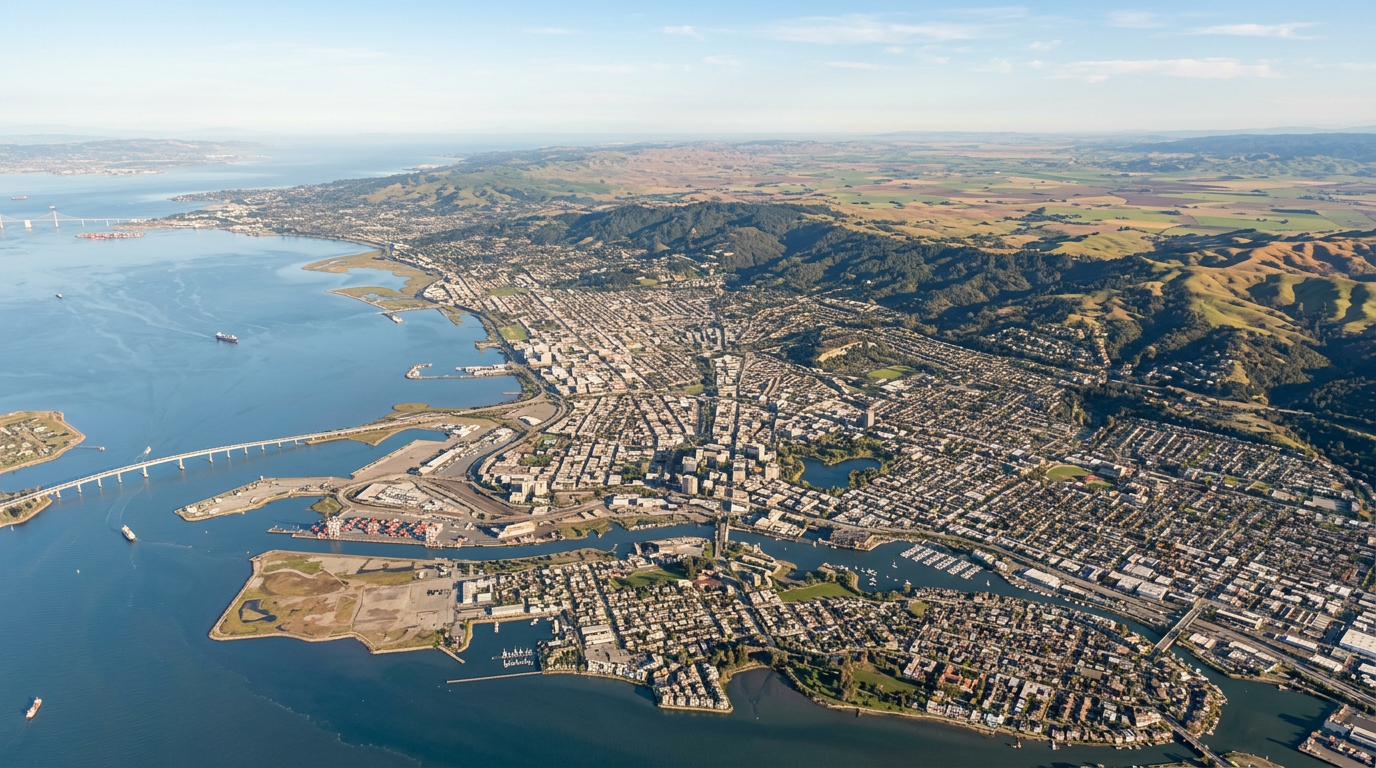
Alameda County stretches across the eastern side of San Francisco Bay, a large and varied part of Northern California made up of distinct communities rather than a single center. Its western edge follows the bay shoreline, where dense urban neighborhoods, waterfront views, and a mix of older bungalows, apartments, and townhomes define daily life. Moving inland, the landscape rises into the East Bay hills, with their regional parkland and trail networks, then opens into broader valley country where suburban streets, newer subdivisions, and larger lots become more common.
Housing across the county shifts with the setting, from compact city homes and condominiums to single-family neighborhoods and semi-rural properties with extra room. Pleasanton, in the valley, is served by the Pleasanton Unified School District, which includes schools like Hearst Elementary and Foothill High School, and the area also offers a range of childcare and early learning options. Throughout the county, residents have access to shopping districts, dining, farmers markets, parks, and shoreline recreation, along with major highways and regional transit that connect to employment centers around the Bay Area.
Alameda County suits commuters, families looking for established school districts, outdoor enthusiasts, and buyers who want to choose between urban energy and suburban space.
In my weekly Birdland work, I find families often start their home search by confirming which properties are convenient to Walnut Grove Elementary School, since it’s nearby and the neighborhood has an established, central setting. They typically compare home layout, yard space, garage configuration, and the practical morning routine rather than focusing on school proximity alone. Birdland’s one- and two-story homes, generally on approximately 6,500–8,000-square-foot lots, can appeal to households planning for several years of elementary-school life.
In my weekly Birdland work, I describe the Pleasanton ACE station as a useful regional-rail option, particularly for commuters whose destinations align with ACE’s service. It is not a universal replacement for every commute, so I encourage buyers to compare the station’s schedule and route with their work hours before relying on it daily. Birdland’s established central location makes regional transportation part of the neighborhood’s practical appeal, but the best fit depends on your destination, transfer needs, and tolerance for driving or connecting to the station.
I review Pleasanton’s wildfire-hazard maps, which the city mapped in 2025, as an initial screening tool for every Birdland home—not as a definitive safety rating. I compare the map with the specific parcel, surrounding vegetation, access, and the home’s condition, then recommend confirming boundaries and current requirements with the city and discussing insurance availability and coverage directly with a qualified provider. Because map designations and regulations can change, buyers should use the latest official map and include appropriate investigation contingencies before making a decision.
As a Birdland agent, I remind buyers that Morrison Homes built the neighborhood’s phases from 1964 through 1977, so modernization needs can vary by phase and individual maintenance history. During inspections, investigate the condition and age of major systems, electrical and plumbing updates, insulation and windows, kitchen and bath renovations, drainage, and any additions for permits and workmanship. Also evaluate whether the home’s 1,500–2,600-square-foot layout, garage, and approximately 6,500–8,000-square-foot lot support the expansion or accessibility changes you may want.